Jamaica has always been a major player in the world of culture, food, and celebration. Despite being a small island of around 2.8 million people, Jamaica still manages to turn simple moments into traditions the whole country looks forward to. Easter is one of those seasons. Church, family, beach plans, and public holidays all matter, but the flavor that defines the weekend for many people is Jamaican bun and cheese.
If you have never spent Easter in Jamaica, Jamaican bun and cheese may sound unusual at first. It is a sweet, spiced Easter bun paired with a slice of processed cheddar cheese. That mix of dark fruit bun and salty cheese is one of the most Jamaican things you can eat in Holy Week. It is as tied to the island as reggae, patties, and a good Good Friday church service.
Visitors often arrive looking for jerk, rum, and beaches. Those are all worth your time. Still, if you want to understand Jamaican culture the way locals live it, you should know this Easter custom. Here is what Jamaican bun and cheese is, where it came from, and how to enjoy it when you are on the island.
WHAT JAMAICAN BUN AND CHEESE ACTUALLY IS
Jamaican bun and cheese is not a British hot cross bun with a new name. The island took an old Easter bread idea and made it heavier, darker, and more Jamaican. The Easter bun is usually baked as a loaf, not a small round roll. It is rich with molasses, brown sugar, mixed peel, raisins, and warm spices such as nutmeg, cinnamon, and mixed spice. Many bakers also use stout, which deepens the color and gives the bun a grown, almost rum-cake energy without turning it into dessert.
A good Jamaican Easter bun is sticky on the outside, moist inside, and packed with fruit. It should slice cleanly. The cheese is the other half of the story. Locals do not reach for brie or aged farmhouse cheddar. They use a mild, salty processed cheddar, often from a round tin or a supermarket block that melts slightly against the sweet bun. Tastee cheese is the name you will hear most in Jamaica, the same way people talk about a specific patty shop when they mean “the real thing.”
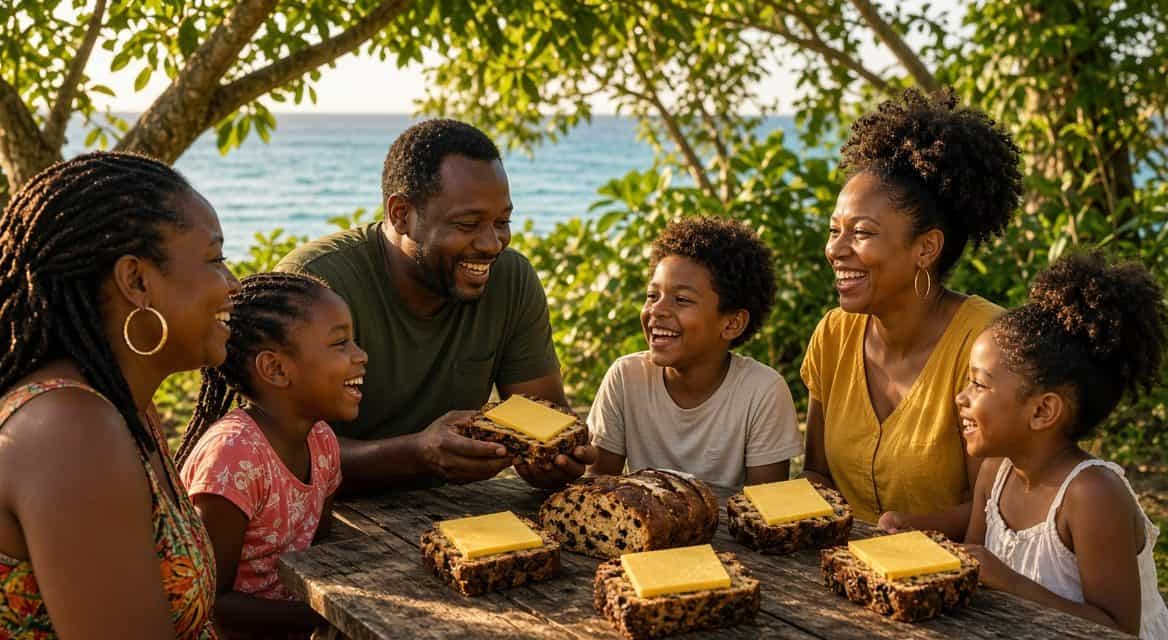
You eat it like a sandwich. One slice of bun. One slice of cheese. Sometimes two slices of bun with the cheese in the middle. That is Jamaican bun and cheese. Sweet, salty, soft, and filling. It is simple food with a lot of memory attached to it.
HOW HOT CROSS BUNS BECAME JAMAICAN EASTER BUN
The roots of this tradition sit in Britain. Hot cross buns were eaten on Good Friday, marked with a cross, and tied to Lent, crucifixion, and the end of fasting. When British influence reached Jamaica, the custom came with it. Over time, the island stopped copying the English bun and started baking its own.
Jamaica’s version swapped honey for molasses. The shape moved from a small marked bun toward a loaf. Fruit and spice got bolder. Stout showed up in many recipes. The cross did not disappear everywhere, but it stopped being the main point. What mattered was a dark Easter bun that could feed a household and travel well as a gift.
That shift is very Jamaican. The island rarely leaves an imported custom untouched. Reggae did that with popular music. Dancehall did that with sound system culture. Jamaican bun and cheese did that with Easter baking. Today, many people treat the combination as more Jamaican than British. In the United Kingdom, hot cross buns still belong to Good Friday. In Jamaica, Easter bun is the seasonal star, and cheese is not optional.
The religious calendar still matters. Jamaica is a deeply Christian country in practice and in public life. Good Friday is quiet, reflective, and church-centered for a lot of families. An Easter bun sandwich is convenient on a day when some people avoid meat. It is also comforting. You can pack it, share it, and keep it on the table while the house fills with cousins, church clothes, and the smell of spice.
WHY CHEESE BELONGS ON EASTER BUN
People outside Jamaica often ask why cheese is on a sweet bun. The answer is balance. A Jamaican Easter bun is sticky, fruity, and heavily spiced. Processed cheddar is salty, creamy, and mild. Together they stop the bun from tasting like cake and stop the cheese from tasting like a snack on its own. It is the same logic as saltfish and ackee, or sweet plantain next to something savory. Jamaican food likes contrast.
There is also a practical side. Cheese keeps well. Bun keeps well. Both are easy to slice, wrap, and send with someone on a country bus or a flight home. That is why Jamaican bun and cheese became a gift food, not only a breakfast. Around Easter, people show up with a loaf and a tin of cheese the way they show up with rum at Christmas. It says you remembered the season.
If you grew up on the island, the taste is tied to memory. School holidays. Your grandmother’s kitchen. A plastic-wrapped loaf on the counter. A knife, a cutting board, and somebody shouting from the veranda that the bun soon finish. Visitors do not get those memories automatically, but one good sandwich will show you why the country refuses to separate the two.
HOW JAMAICANS EAT BUN AND CHEESE
There is no single correct method, but there is a local rhythm. Most people slice the Easter bun thick. The cheese is sliced thinner. Some like it room temperature. Some toast the bun lightly so the edges firm up and the fruit gets stickier. You will also see it packed for the road, eaten after church, or left on the table all weekend for anybody who passes through the house.
In Patwa, you will hear it the way it is lived: bun an cheese. Somebody might say they going buy bun, or that the Easter bun look rich this year, or that the cheese cut too thin. If a friend tells you, “Come taste di bun an cheese,” they are not offering a novelty. They are offering the season.
Drinks stay simple. Ginger beer, sorrel if any is left from earlier in the year, a cold stout, or a sweet juice all work. The point is not a fancy pairing. The point is sitting down, talking, and eating something that only dominates the shops for a short stretch of the year.
Commercial bakeries and big brands sell Easter bun all over the island. Homemade loaves still matter, especially in family homes and smaller communities. Some buns are darker and heavier with stout. Others are lighter and sweeter. Fruit-heavy loaves have a following. So do glazed loaves that shine under bakery lights. Trying more than one is part of the fun.
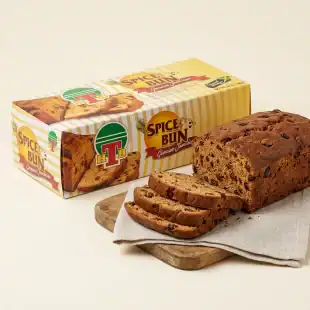
Delicious easter bun
EASTER IN JAMAICA FOR VISITORS
If you are traveling at Easter, Jamaican bun and cheese is one of the easiest culture lessons you can take home. You do not need a reservation or a tour guide. You need a supermarket, a bakery, or a friendly host
Good Friday and Easter Monday are public holidays. Many businesses slow down or close on Good Friday. Churches fill up. The mood can feel quieter than a typical Jamaican weekend, especially in the morning. Easter Monday often turns outward again, with family trips, beaches, and community fun days. Through all of that, Easter bun stays in circulation.
In Kingston, look for busy bakeries and well-stocked supermarket aisles in the week before Easter. In Montego Bay, Ocho Rios, and smaller towns, the same thing happens on a local scale. Popular bakers sell out. People order in advance. If you wait until Easter Sunday afternoon, you may still find bun, but the best loaves move early. That is a useful travel tip: buy your Jamaican bun and cheese before you think you need it.
Do not expect the British supermarket version. Do not expect a plain fruitcake either. A Jamaican Easter bun should be moist, spiced, and dark. If the loaf looks pale and dry, keep walking. If the cheese is bland and rubbery, it is still doing its job. The salt is the point.
Easter is also a good time to listen. Jamaica’s everyday language opens up around food. Learning a few Patwa lines about food and holidays will take you further than a phrasebook full of greetings you never use. When somebody asks if you like the bun, answer honestly. Locals can tell when a visitor is pretending. They also respect a visitor who actually tastes the culture instead of only photographing it.
BUN AND CHEESE BEYOND EASTER WEEKEND
The tradition peaks at Easter, but it does not vanish the minute Holy Week ends. Some shops sell bun later in the year. Jamaican communities in New York, London, Toronto, and Miami keep the custom going, especially when Easter falls and care packages start moving. For the diaspora, Jamaican bun and cheese is a taste of home. For people on the island, it is a marker that the holiday has arrived.
That is why the custom has staying power. It is affordable. It is shareable. It works for church families, party families, and travelers who only have a hotel kettle and a supermarket bag. You can eat it for breakfast, pack it for a drive across the island, or put it out when friends drop in unannounced. Jamaica runs on that kind of hospitality.
It is also a reminder that Jamaican culture is not only music and athletics. Those matter, and the island has every right to be proud of them. Food customs like this one show the same creativity. An old British Good Friday bun became a Jamaican loaf. A tin of processed cheese became essential. Together they created a seasonal identity you can smell from the bakery door.
WHAT THIS TRADITION SAYS ABOUT JAMAICA
Spend enough time here and you notice a pattern. Jamaica takes what history handed the island and remixes it until it feels local. Language did that. Music did that. Easter baking did that too. Jamaican bun and cheese is humble food, but it carries church history, colonial history, family habit, and street-level taste in every slice.
It also welcomes outsiders without a lecture. You do not need to know the full story of hot cross buns to enjoy an Easter bun sandwich. You only need to try it the Jamaican way: bun, cheese, and no apology for the combination. After that, the culture starts making more sense. Sweet and salt together. Serious faith and serious flavor. A small island that keeps inventing big traditions.
If you want to go deeper after the last slice, learn the language people use around the table. A few Patwa phrases will help you order, joke, and understand what is happening in a Kingston bakery line or a country kitchen. Food opens the door. Language keeps it open.
These notes on Jamaican bun and cheese are only the start of Jamaica’s Easter story. The island has church services, family gatherings, beach days, and plenty more to see once the holiday weekend begins. No matter where you start, you will be happier if you taste the Easter bun the way Jamaicans eat it. Get the loaf. Get the cheese. Sit down. That is the tradition.